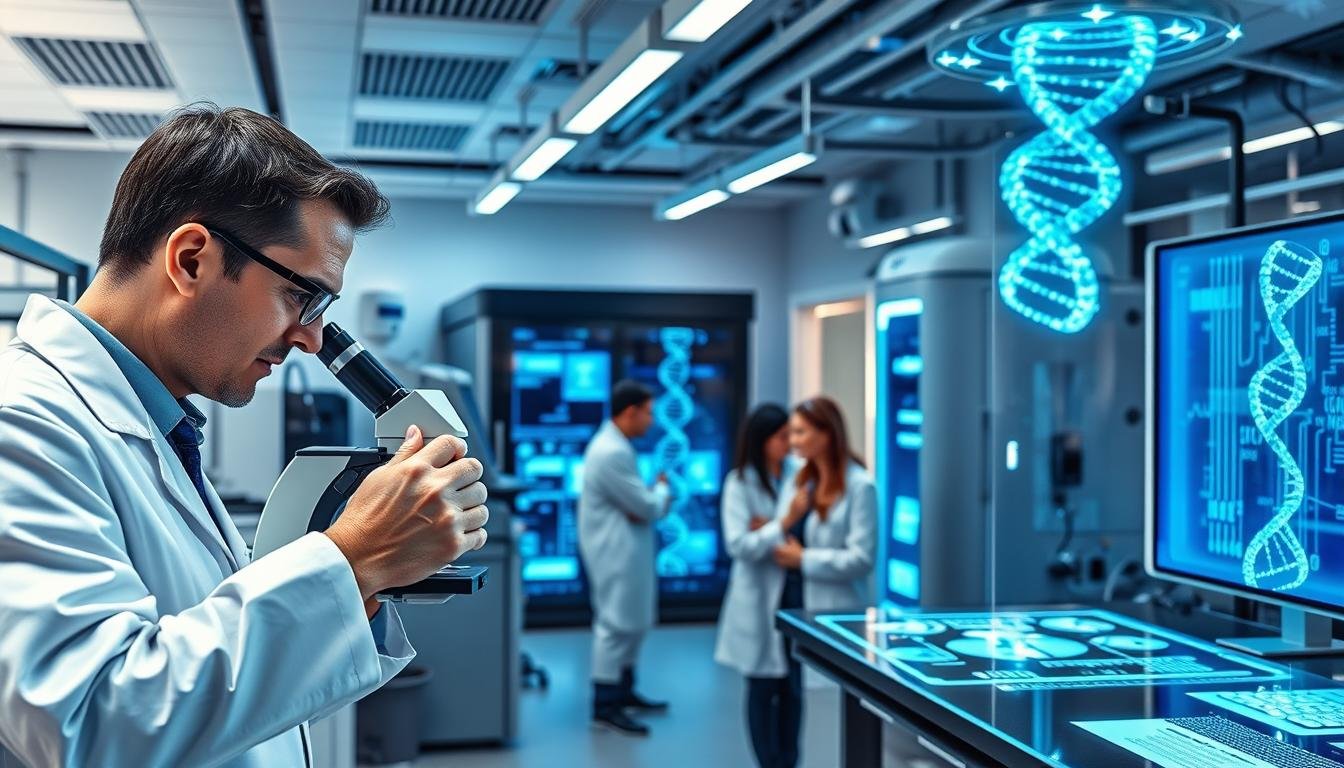
As we look ahead to 2025, the Biotech Innovations is poised to revolutionize various aspects of our lives, from healthcare to environmental sustainability. Gene editing and personalized medicine are among the cutting-edge technologies that are expected to make significant strides.

The integration of AI-powered drug discovery is also set to transform the biotech landscape, enabling the development of more effective treatments and therapies. With a focus on groundbreaking research, we will explore the top biotech advancements to watch in the coming years.
Key Takeaways
- Advances in gene editing technologies
- Personalized medicine becoming more prevalent
- AI-powered drug discovery revolutionizing treatment development Page
- Biotech innovations transforming healthcare and sustainability
- Groundbreaking research driving industry progress
The Evolving Landscape of Biotechnology in 2025
In 2025, the biotech industry is poised to witness transformative changes, driven by cutting-edge technologies. The convergence of advancements in gene editing, synthetic biology, and other innovative fields is reshaping the industry’s landscape.
Page Speed Insights Current State of the Biotech Industry
The biotechnology sector has experienced significant growth in recent years, driven by increased investment in research and development. The current state Page Speed Insights of the industry is characterized by Page Speed Insights a heightened focus on developing novel therapeutics, improving manufacturing processes, and expanding the application of biotech solutions across various sectors.
Key players in the industry are leveraging synthetic biology to create innovative products and solutions. This has led to the emergence of new business models and partnerships, further accelerating the growth of the Biotech Innovations.
Key Drivers Shaping Future Innovations
Several factors are Page Speed Insights driving future innovations in the Biotech Innovations industry. Advances in gene editing technologies, such as CRISPR, are enabling precise modifications to genomes, opening up new possibilities for treating genetic diseases. Additionally, the integration of artificial intelligence Page Speed Insights and machine learning is streamlining the drug discovery process, reducing costs, and Page Speed Insights improving success rates.
Future innovations in Biotech Innovations are expected to be shaped by the convergence of multiple disciplines, including biology, chemistry, and information technology. This interdisciplinary approach will lead to the development of novel solutions and products, transforming various aspects of our lives.
Revolutionary Advances in Gene Editing Technologies
Recent breakthroughs in gene editing are transforming the landscape of Biotech Innovations and medicine. Gene editing technologies, particularly CRISPR, have revolutionized the field by enabling precise, efficient, and relatively inexpensive modifications to the genome.
Next-Generation CRISPR Systems and Applications
The CRISPR-Cas system has expanded beyond its original application, with new variants such as CRISPR-Cas12a and CRISPR-Cas13 being explored for their potential in gene editing and regulation. These next-generation CRISPR systems offer improved specificity, efficiency, and the ability to target a wider range of genes.
- Enhanced specificity reduces off-target effects.
- New CRISPR variants offer broader applicability.
- Potential for treating genetic diseases at the root cause.
Base Editing and Prime Editing Breakthroughs Page
Base editing and prime editing represent significant advancements in gene editing technology. Base editing allows for the direct, irreversible conversion of one DNA base to another without making a double-stranded break in the genome. Prime editing combines the precision of base editing with the ability to targeted insert or delete sequences, offering a versatile tool for genome editing.
Key benefits include:
- Precision editing without double-stranded breaks.
- Potential to correct point mutations directly.
- Versatility in editing operations.
Ethical Considerations and Regulatory Developments
As gene editing technologies advance, ethical considerations and regulatory frameworks are evolving to address the implications of these technologies. Ensuring the safe and responsible use of gene editing is paramount, with ongoing discussions focusing on germline editing, mosaicism, and access to these technologies.
The future of gene editing will be shaped by how effectively we navigate these ethical and regulatory challenges.
Personalized Medicine: Tailoring Treatments to Individual Genetic Profiles
Personalized medicine represents a significant shift in healthcare, leveraging individual genetic profiles to guide treatment decisions. This approach is transforming the way we understand and treat diseases, offering more effective and targeted therapies.
The integration of genetic data into healthcare is enabling practitioners to predict patient responses to various treatments, thereby personalizing medical care. This is largely made possible through advancements in pharmacogenomics, liquid biopsies, and personalized immunotherapies.
Pharmacogenomics and Drug Response Prediction
Pharmacogenomics is the study of how genes affect the response to drugs. By analyzing a patient’s genetic makeup, healthcare providers can predict how they will respond to certain medications, thereby avoiding trial-and-error approaches to treatment. This field is revolutionizing the way drugs are prescribed, making treatments more effective and reducing the risk of adverse reactions.
Liquid Biopsies for Early Disease Detection
Liquid biopsies are a non-invasive diagnostic tool that detects genetic material from tumors or other diseases in bodily fluids such as blood. This technology allows for early disease detection and monitoring, Page providing a less invasive alternative to traditional tissue biopsies. Liquid biopsies can help track disease progression and response to treatment in real-time.
Personalized Immunotherapies and Cancer Treatments
Personalized immunotherapies involve tailoring cancer treatments to the specific genetic characteristics of a patient’s tumor. This approach has shown significant promise in treating various types of cancer, offering new hope to patients with previously untreatable conditions. By leveraging the body’s immune system, these therapies can target cancer cells more effectively, reducing side effects and improving outcomes.
| Technology | Application | Benefit |
|---|---|---|
| Pharmacogenomics | Predicting drug response | More effective treatments |
| Liquid Biopsies | Early disease detection | Non-invasive diagnosis |
| Personalized Immunotherapies | Cancer treatment | Targeted therapy |
AI-Powered Drug Discovery and Development
The application of AI in drug discovery is unlocking new avenues for the development of innovative therapies. By leveraging advanced algorithms and machine learning models, researchers can now identify potential drug targets more efficiently, streamline clinical trials, and enhance molecular modeling.
Machine Learning Models for Target Identification
Machine learning models are being increasingly used to identify potential drug targets. These models analyze vast amounts of biological data to predict the efficacy and safety of potential drug candidates. By doing so, they significantly reduce the time and cost associated with the initial stages of drug development.
Key benefits of machine learning in target identification include:
- Enhanced accuracy in predicting drug efficacy
- Reduced time and cost in the drug development process
- Ability to analyze complex biological data sets Page 1li>
Accelerated Clinical Trials through Predictive Analytics
Predictive analytics is revolutionizing the clinical trial process by identifying potential issues before they arise. This proactive approach enables researchers to optimize trial design, improve patient outcomes, and reduce the risk of trial failures.
| Predictive Analytics Applications | Benefits |
|---|---|
| Optimizing trial design | Improved patient outcomes |
| Identifying potential trial issues | Reduced risk of trial failures |
“The use of predictive analytics in clinical trials is a game-changer for the pharmaceutical industry, enabling more efficient and effective drug development.”
Quantum Computing Applications in Molecular Modeling
Quantum computing is poised to revolutionize molecular modeling Page 1 by enabling the simulation of complex molecular interactions with unprecedented accuracy. This capability will significantly enhance the drug discovery process, allowing for the development of more effective treatments.
By integrating AI-powered drug discovery techniques, the pharmaceutical industry is on the cusp of a significant transformation. As these technologies continue to evolve, we can expect to see the development of innovative new treatments and therapies.
Synthetic Biology: Engineering Novel Biological Systems
Synthetic biology involves the design and construction of new biological systems, offering vast potential for innovation and sustainability. This field is rapidly advancing, with significant implications for various industries, including pharmaceuticals, agriculture, and energy.
One of the key areas of advancement in synthetic biology is the development of designer Page microorganisms for industrial applications. These microorganisms can be engineered to produce specific compounds Page such as biofuels, chemicals, and therapeutic proteins. For instance, companies like Zymergen are leveraging machine learning and synthetic biology to optimize microbial strains for large-scale production.
Page Designer Microorganisms for Industrial Applications
The creation of designer microorganisms is revolutionizing industrial processes. By engineering microbes with specific traits, scientists can enhance the production of valuable chemicals Page and materials. This approach not only improves efficiency but also reduces environmental impact.
Cell-Free Systems and Biomanufacturing
Another significant development in synthetic biology is the use of cell-free systems for biomanufacturing. These systems allow for the production of complex biological molecules without the need for living cells. This technology has the potential to streamline production processes and reduce costs.
Cell-free systems are particularly useful for producing proteins and other molecules that are difficult to manufacture using traditional methods. Companies like Page Ginkgo Bio works are at the forefront of this technology Page exploring its Page applications in various industries.
Synthetic Genomics and Minimal Cells
Synthetic genomics is another area where significant progress is being made. This involves the design and construction of synthetic genomes, enabling the creation of minimal cells with predefined functions. Such cells can be optimized for specific tasks, such as the production of biofuels or other valuable compounds.
As noted by Craig Venter, “Synthetic genomics is not just about making new life forms; it’s about understanding life and using that understanding to create new biological systems that can solve real-world problems.” This quote underscores the potential of synthetic genomics to drive innovation and sustainability.
Biotech Innovations 2025: Microbiome-Based Therapeutics
As we look ahead to 2025, microbiome-based therapeutics are taking center stage in Biotech Innovations advancements. The human microbiome, a complex ecosystem comprising trillions of microorganisms, plays a crucial role in our health and disease prevention. Recent breakthroughs in understanding this intricate system have led to innovative therapeutic approaches, promising new avenues for treating various conditions.

Engineered Probiotics as Living Medicines
Engineered probiotics represent a cutting-edge frontier in microbiome-based therapeutics. By genetically modifying probiotic strains, scientists can create “living medicines” that can produce therapeutic molecules directly in the gut. This approach has shown promise in treating metabolic disorders, such as phenylketonuria, and has potential applications in managing inflammatory bowel diseases.
These engineered probiotics can be designed to survive passage through the stomach and colonize the intestines, where they can Page their therapeutic effects. This targeted approach may reduce side effects and improve efficacy compared to traditional treatments.
Microbiome Modulation for Mental Health
The gut-brain axis has garnered significant attention in recent years, revealing a profound connection between the microbiome and mental health. Research has shown that alterations in the gut microbiota are associated with various psychiatric conditions, including depression and anxiety. Microbiome modulation, through dietary interventions, probiotics, or fecal microbiota transplantation, is being explored as a potential therapeutic strategy for mental health disorders.
Phage Therapy Resurgence and Antimicrobial Resistance
Phage therapy, the use of bacteriophages to treat bacterial infections, is experiencing a resurgence due to the growing challenge of antimicrobial resistance. As antibiotic resistance continues to rise, phage therapy offers a promising alternative. Bacteriophages can be engineered to target specific bacterial strains, providing a highly specific and potentially more effective treatment option.
The specificity of phage therapy may also reduce the disruption of the commensal microbiota often seen with broad-spectrum antibiotics, potentially leading to better patient outcomes and reduced risk of secondary infections.
Neurotechnology: Interfacing with the Brain
The rapid advancement of neurotechnology Page is revolutionizing our ability to interface with the brain. This field encompasses a broad range of technologies designed to interact with the nervous system, including brain-computer interfaces, neuromodulation techniques, and optogenetics. These innovations hold great promise for treating neurological disorders and enhancing human cognition.
Brain-Computer Interfaces for Medical Applications
Brain-computer interfaces (BCIs) enable direct communication between the brain and external devices. Recent advancements Page in BCIs have opened up new possibilities for individuals with paralysis or other motor disorders. For instance, Neuralink’s implantable BCI technology has shown promising results in clinical trials, allowing patients to control digital devices with their thoughts. BCIs are also being explored for their potential in rehabilitation and prosthetic control.
Neuromodulation Techniques for Neurological Disorders
Neuromodulation involves the use of electrical or magnetic stimulation to modulate neural activity. Techniques such as deep brain stimulation (DBS) have been effective in treating conditions like Parkinson’s disease and epilepsy. Other neuromodulation methods, including transcranial magnetic stimulation (TMS) and transcranial direct current stimulation (tDCS), are being investigated for their potential in treating depression, anxiety, and other neurological disorders.
Optogenetics and Targeted Neural Control
Page Optogenetics is a revolutionary technique that allows for the precise control of neuronal activity using light. By genetically modifying neurons to express light-sensitive channels, researchers can activate or silence specific neural populations. This technology has far-reaching implications for understanding neural circuits and developing novel treatments for neurological disorders.
| Neurotechnology | Application | Potential Benefits |
|---|---|---|
| Brain-Computer Interfaces | Control of prosthetic devices, communication for paralyzed individuals | Enhanced independence, improved quality of life |
| Neuromodulation Techniques | Treatment of Parkinson’s disease, epilepsy, depression | Symptom reduction, improved motor function |
| Optogenetics | Precise control of neural activity, treatment of neurological disorders | Potential cure for certain neurological conditions |
Sustainable Biotech Innovations Solutions for Environmental Challenges
Sustainable Biotech Innovations is revolutionizing the way we approach environmental challenges, providing cutting-edge solutions for a cleaner world. As the world grapples with issues like pollution, climate change, and waste management, biotech innovations are stepping in to offer sustainable alternatives.
The need for sustainable solutions has never been more pressing. With the global population projected to reach 9.7 billion by 2050, finding eco-friendly ways to manage resources and reduce waste is crucial. Sustainable Biotech Innovations is at the forefront of this effort, leveraging advancements in Biotech Innovations to develop innovative solutions.
Bioremediation and Environmental Cleanup Technologies
Bioremediation, the use of living organisms or their byproducts to clean up pollutants, is a key area of sustainable Biotech Innovations. Microorganisms like bacteria and fungi are being engineered to break down toxic substances, restoring contaminated sites to their natural state. For instance, genetically modified bacteria can degrade oil spills, while fungi can remove heavy metals from soil.

Page Biofuels and Alternative Energy Sources
Biofuels derived from organic matter offer a renewable alternative to fossil fuels, reducing greenhouse gas emissions and dependence on non-renewable energy sources. Advanced Biotech Innovations techniques are being used to produce biofuels from algae, agricultural waste, and even sewage sludge, providing a cleaner energy option for transportation and power generation.
Biodegradable Materials and Green Chemistry
The development of biodegradable materials is another significant aspect of sustainable Biotech Innovations. By creating products that can easily decompose, we can reduce plastic waste and minimize environmental harm. Green chemistry principles are being applied to design materials that are not only biodegradable but also non-toxic and sustainable throughout their lifecycle.
| Sustainable Biotech Solution Pageh | Environmental Benefit | Example |
|---|---|---|
| Bioremediation | Cleanup of pollutants | Genetically modified bacteria for oil spill cleanup |
| Biofuels | Renewable energy source | Algae-based biofuels for transportation |
| Biodegradable Materials | Reduction in plastic waste | Biodegradable packaging materials |
These sustainable Biotech Innovations solutions are paving the way for a more environmentally friendly future. By harnessing the power of Biotech Innovations, we can address some of the most pressing environmental challenges of our time, creating a cleaner, greener world for generations to come.
Conclusion: The Future Impact of Biotech Innovations
Biotech innovations in 2025 are set to transform various aspects of our lives, from healthcare to environmental sustainability. Advancements in gene editing, personalized medicine, AI-powered drug discovery, and synthetic biology are revolutionizing the Biotech Innovations landscape.
These developments will significantly impact the future of disease treatment and prevention. Personalized medicine enables tailored treatments based on individual genetic profiles, leading to more effective healthcare outcomes. The integration of AI in drug discovery is accelerating the development of new treatments.
Synthetic biology is opening up new avenues for sustainable production of biofuels and other chemicals. As biotech innovations continue to evolve, they will play a crucial role in shaping a more sustainable and healthy world.
Understanding the potential of biotech innovations allows us to prepare for their future impact on healthcare and sustainability, harnessing their benefits to create a brighter future.
Table of Contents
FAQ
What are the most promising biotech innovations to watch in 2025?
Some of the most promising biotech innovations to watch in 2025 include advancements in gene editing, personalized medicine, AI-powered drug discovery, synthetic biology, and microbiome-based therapeutics.
How will gene editing technologies impact the Biotech Innovations industry in 2025?
Gene editing technologies, such as next-generation CRISPR systems, base editing, and prime editing, are expected to revolutionize the Biotech Innovations in 2025 by enabling precise modifications to the genome, leading to breakthroughs in disease treatment and prevention.
What is the role of AI in biotech innovations?
AI is playing a crucial role in biotech innovations, particularly in drug discovery and development, by identifying potential drug targets, streamlining clinical trials, and enhancing molecular modeling through machine learning and predictive analytics.
How will synthetic biology contribute to sustainability in 2025?
Synthetic biology is expected to contribute to sustainability in 2025 by enabling the design and construction of novel biological systems, such as designer microorganisms, cell-free systems, and synthetic genomics, which can be used to produce biofuels, clean up environmental pollution, and reduce waste.
What are the potential applications of microbiome-based therapeutics?
Microbiome-based therapeutics, including engineered probiotics, microbiome modulation, and phage therapy, have the potential to address various health conditions, such as mental health disorders, antimicrobial resistance, and other diseases, by targeting the complex ecosystem of the microbiome.
How will neurotechnology impact the treatment of neurological disorders?
Neurotechnology, including brain-computer interfaces, neuromodulation techniques, and optogenetics, is expected to impact the treatment of neurological disorders by enabling innovative technologies to interface with the brain, potentially addressing conditions such as paralysis, depression, and anxiety.
What are the benefits of bioremediation and environmental cleanup technologies?
Bioremediation and environmental cleanup technologies have the potential to address environmental pollution by using microorganisms, enzymes, or other biological systems to clean up contaminated soil, water, and air, promoting a healthier environment and reducing the impact of human activities on the ecosystem.
How will biotech innovations impact the future of healthcare?
Biotech innovations, including personalized medicine, gene editing, and microbiome-based therapeutics, are expected to transform the future of healthcare by enabling tailored treatments, improving disease diagnosis, and promoting preventive care, ultimately leading to better patient outcomes and improved quality of life.
Source link
- https://www.wsj.com/health/pharma/bayer-kumquat-biosciences-team-up-on-new-potential-cancer-drug-16df49dd
- https://www.investors.com/news/technology/insmed-stock-lung-disease-brensocatib/
- https://www.thetimes.co.uk/article/a-vaccine-that-can-survive-without-refrigeration-may-be-a-game-changer-n6n9q72th